@showsiveseen Happy closing performance to Moises Kaufman and Amanda Gronich's "Here There Are Blueberries" #play from @Seattle Rep, @La Jolla Playhouse, and Tectonic Theater Project. Thoughtful scenic design, projection design, and sound design by Derek McLane, Bobby McElver, and David Bengali respectively. Well-executed, riveting, and chillingly relevant. Review: showsiveseen.com/14604 Photography: Kevin Parry Stage Mgr: Jacob Russell #photograph #photographs #theatre ♬ 2 Little 2 Late – Levi & Mario
Elevator Thoughts (aka Tweet): Happy closing weekend to Moises Kaufman and Amanda Gronich’s Here There Are Blueberries play from Seattle Rep, La Jolla Playhouse, and Tectonic Theater Project. Thoughtful scenic design, projection design, and sound design by Derek McLane, Bobby McElver, and David Bengali respectively. Well-executed, riveting, and chillingly relevant.
See it if you’re okay with shows that are not heavy on a linear story
Was This the First Time I Attended a Production of this Show? Yes
Would I See It Again 3 Years from Now? Probably not, but it was good.
Mainstream Appeal: Medium
If A Random Stranger Asked What Show They Should See This Weekend, Would I Mention This Production? Yes
My Synopsis (No Spoilers): A Holocaust museum acquires a scrapbook from the Auschwitz concentration camp containing photographs exclusively of Nazi personnel, with no Jewish prisoners depicted. The play investigates the origins of these images and the unsettling story behind each of these pictures.
Synopsis from the Licensor or Theatre Company: In 2007, a mysterious album featuring Nazi-era photographs arrived at the desk of a U.S. Holocaust Memorial Museum archivist. As curators unravel the shocking truth behind the images, the album soon makes headlines and ignites a debate that reverberates far beyond the museum walls. Based on real events, Here There Are Blueberries tells the story of these historical photographs—what they reveal about the perpetrators of the Holocaust, and our own humanity.
Type: Play
World Premiere: No
Several or Few Scenes: Several
Several or Few Settings/Locations: Several
Static (Stationary) or Dynamic Set: Mostly dynamic
Prior Exposure/Knowledge Required: You need to be at least remotely familiar with the Holocaust.
Defined Plot/Storyline: Not fully defined, but there was still some story linearity with the museum staff to weave each photograph together.
Live Band/Orchestra: N/A – But occasionally one of the actors played the accordion
Union Actor(s): All
Total Actor(s): 8
Perceived Pace of the Show: Medium speed
Was there an intermission? No
Length (Including Any Intermission): 90 minutes
Other Rave(s)
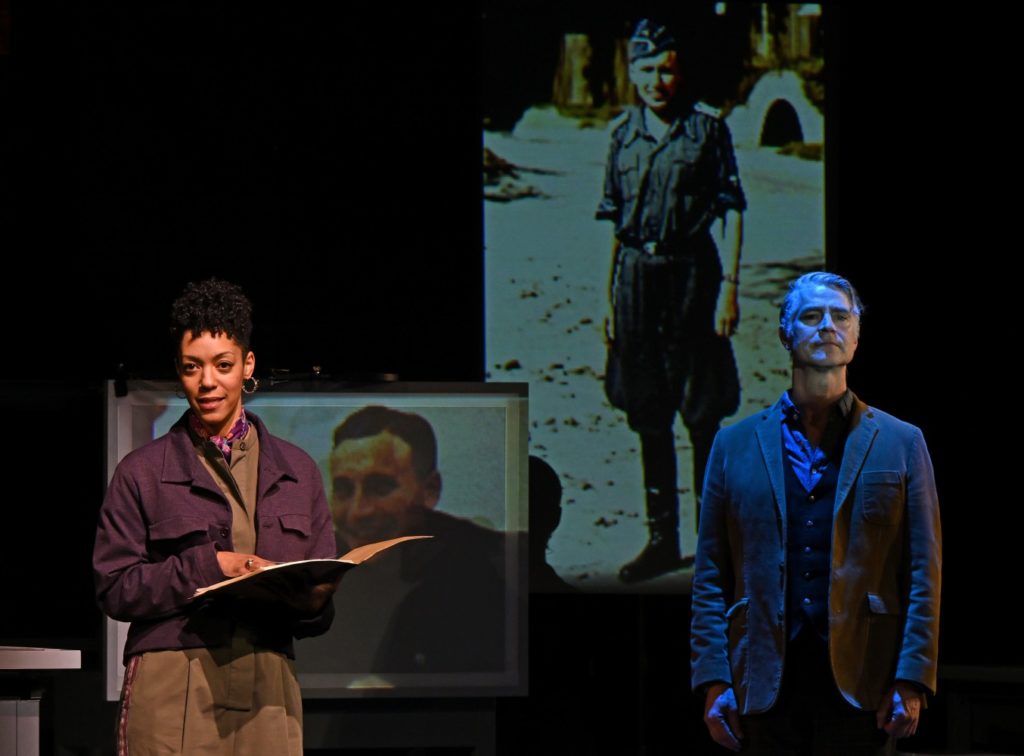
- Nazi Photographs: The script offered a unique perspective by focusing on how Nazis lived in Auschwitz. It was a viewpoint rarely explored in mainstream narratives, which typically center on Jewish prisoners. Through a plethora of images, the production showed the seemingly ordinary daily life of the perpetrators with a track and field event, a vacation resort, Christmas celebrations, working women relaxing, a singing gathering (where they celebrated a certain major mass genocide), and innocent children living feet away from the gas chambers. The pictures depicted a deceptive, almost idyllic normalcy. It was a chilling reminder that ordinary people are capable of extraordinary cruelty. Who’s behind the ICE mask and who’s wearing the MAGA hat?
The script depicted Nazis as people – not monsters – and forced us to confront the uncomfortable truth that atrocity can emerge from everyday individuals. It pointed out that it’s easier to assign culpability to people portrayed as monsters than people portrayed as run-of-the-mill citizens. At the same time, the production was careful not to glorify or elevate the perpetrators. It navigated a delicate, controversial balance with nuance. The images would disturb most viewers, while unfortuantely a neo-Nazi might even find the depiction appealing. But the script’s intent was clear to see the opposite perspective of this atrocious history without excusing it. - Background Audio: Much like a museum providing background audio to complement its exhibits, this production paired each image with its own carefully crafted soundscape by sound designer Bobby McElver. The audience was treated to an audio backdrop of women laughing, men singing (accompanied by Marrick Smith on accordion), and women enjoying blueberries. It all created a layered, immersive experience that brought the still images to life.
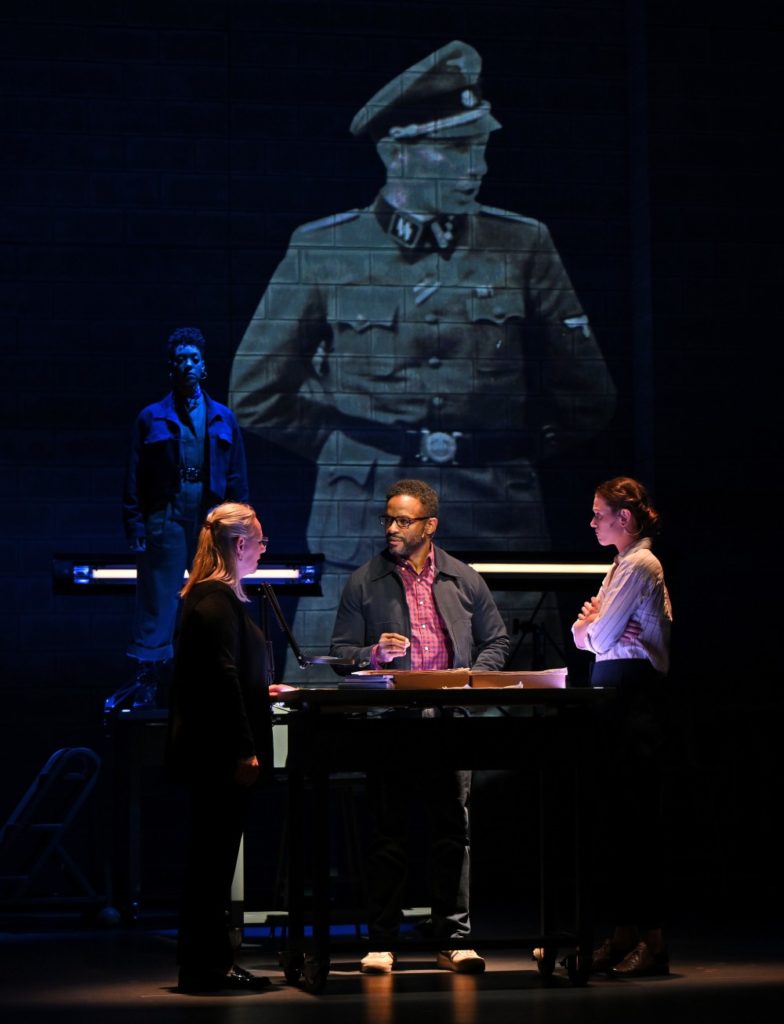
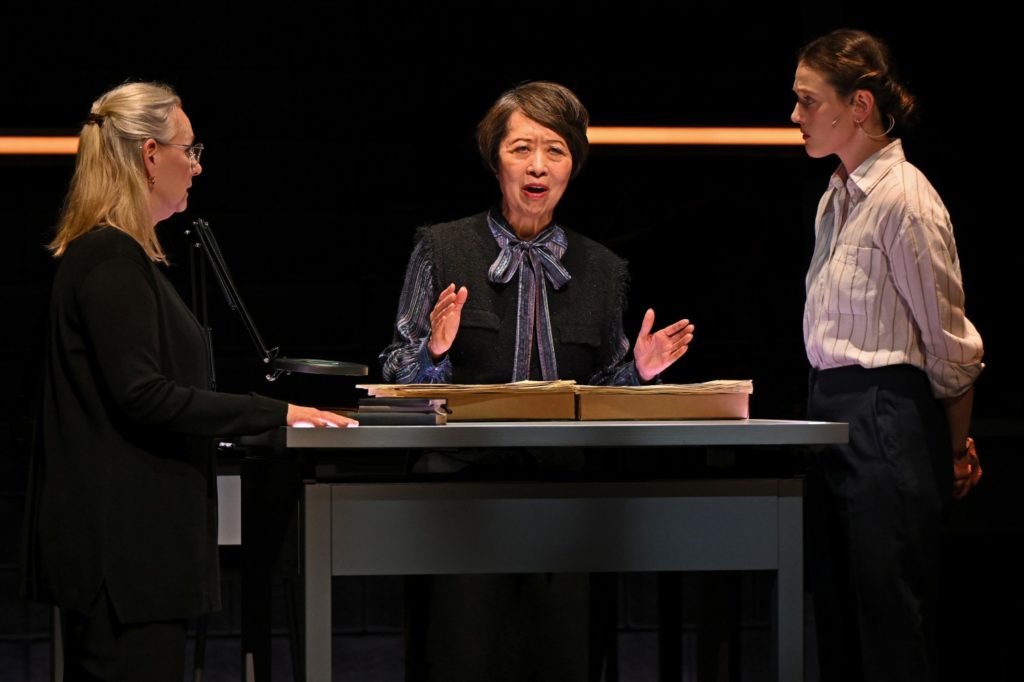
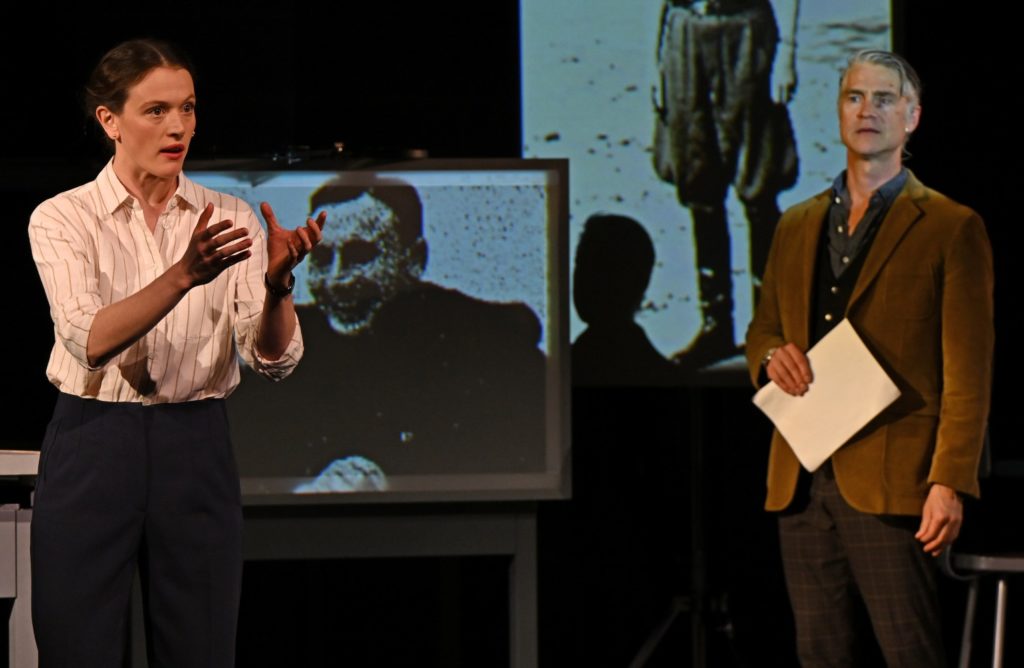
- Scenic Design: The visuals were thoughtfully designed and executed by scenic designer Derek McLane, evoking the feel of an industrial museum curated with precision. Actors moved among projection “easels,” allowing them to display additional photographs or zoom in on details. The gas-chamber-like door at the end was a haunting detail underscoring the gravity of the Holocaust narrative.
- Projection Design: Interestingly, the projection designer David Bengali briefly employed two technically ambitious effects that hinted at greater possibilities. One involved live recording an actor on stage and projecting it in real time, while another used an overhead projector (unless it was just a prerecorded video) reminiscent of Book-It Theatre’s staging of Everything Is Illuminated. Typically, a production that invests in such complex technology integrates it throughout the show. But here, each device appeared for only a few minutes, leaving the audience wanting more.
- Relevance: This play feels incredibly timely given current events surrounding ICE. In a few years, when another playwright inevitably tackles the ICE events we’re seeing today, there will be even more visual documentation thanks to ubiquitous smartphone cameras. But will history deniers dismiss those images as AI-generated?
Theatre Company: National Tour from Seattle Rep, La Jolla Playhouse, and Tectonic Theatre Project
Venue: Bagley Wright Theater at Seattle Rep
Venue Physical Address: 155 Mercer St, Seattle, WA 98109
Dates: January 21 – February 15, 2026
Like/Comment/Share my Social Media Posts About this Performance:
Buy a Ticket or Learn More:
- https://www.heretherareblueberries.com/
- https://www.seattlerep.org/plays/202526-season/here-there-are-blueberries
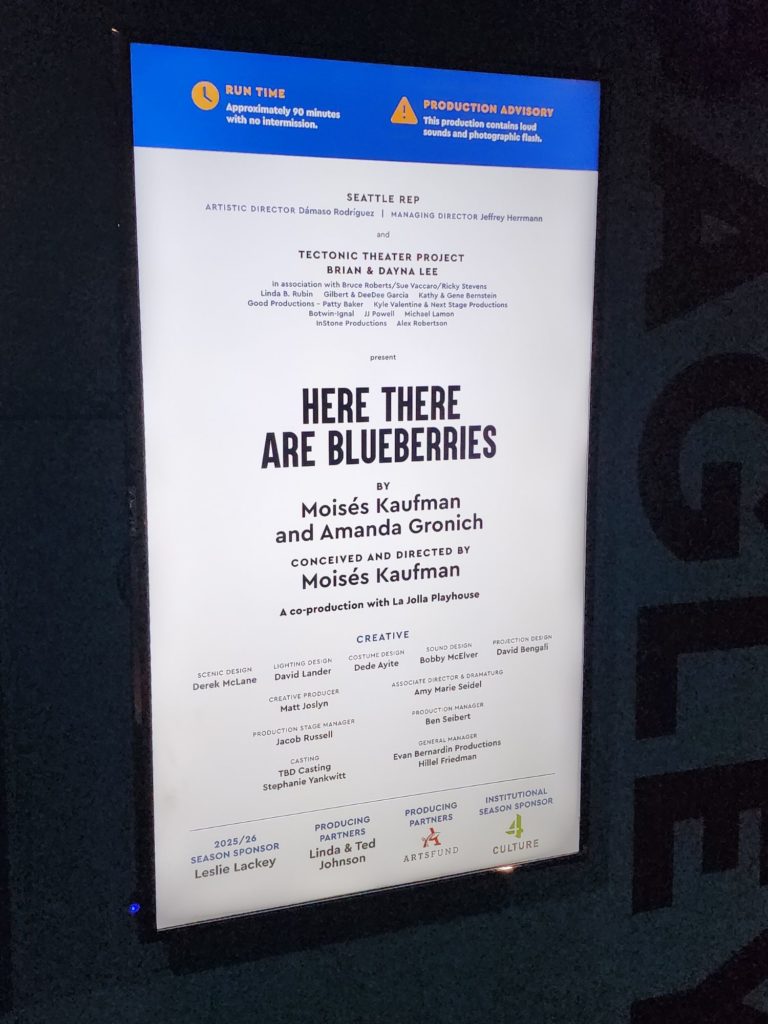
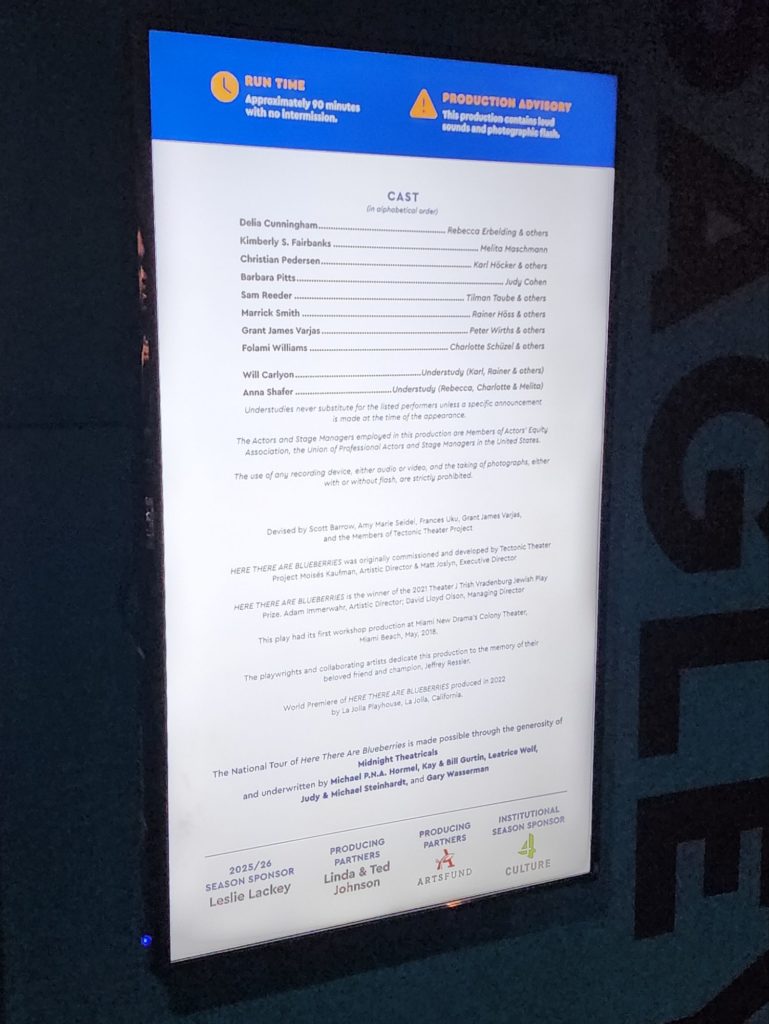
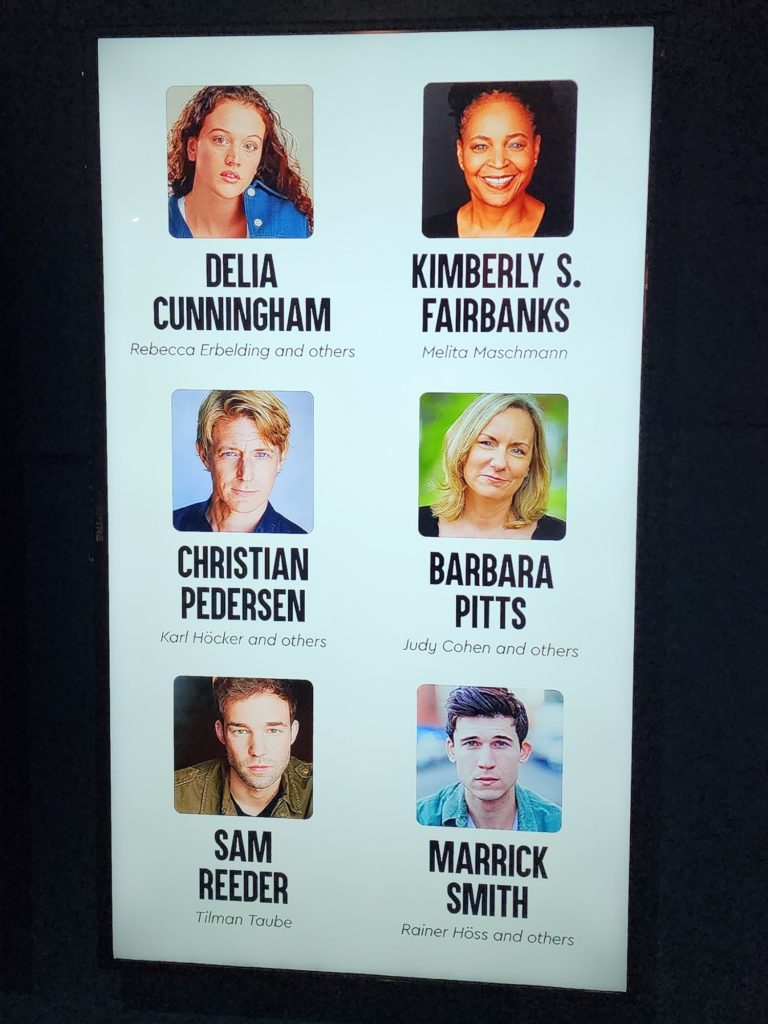
- Program
Photos: See production photos below by Kevin Parry Photography.
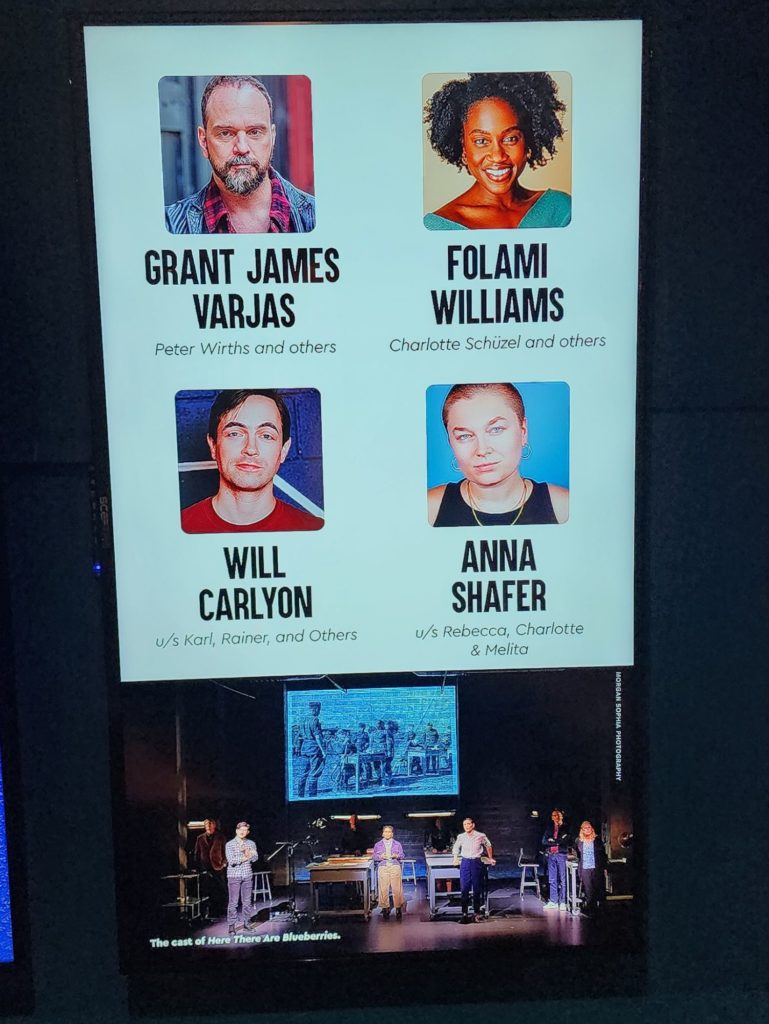
Cast and Production Team: See after photos below.

1 thought on “Here There Are Blueberries – Play – Review – Seattle Rep, La Jolla Playhouse, and Tectonic Theatre Project”