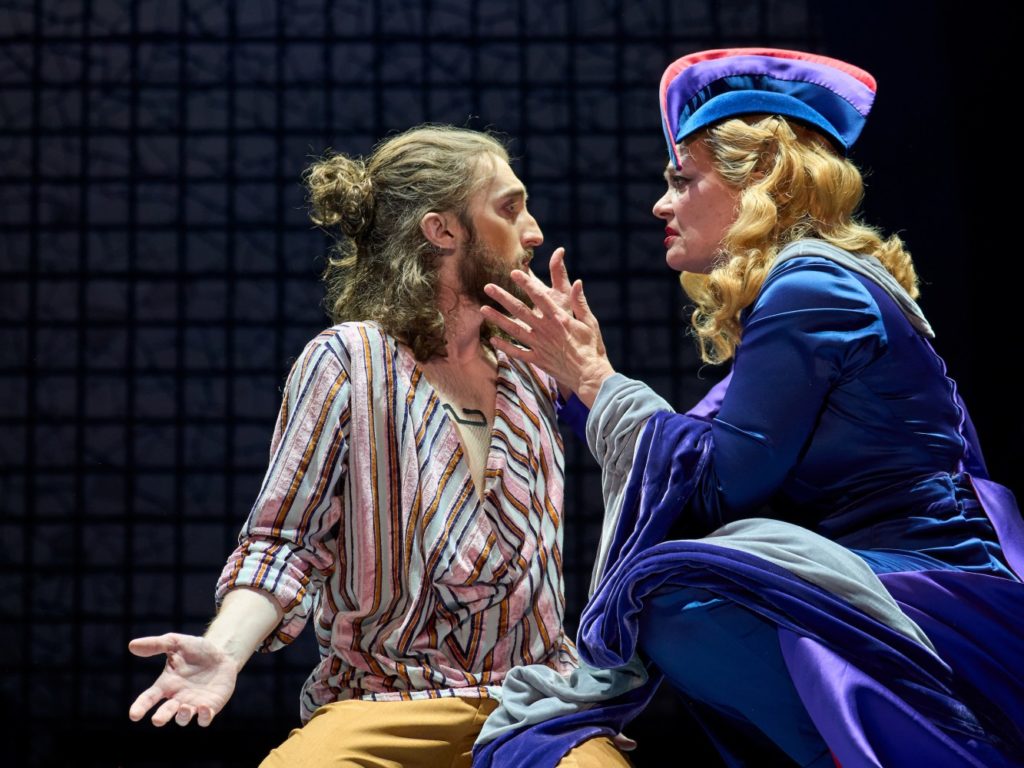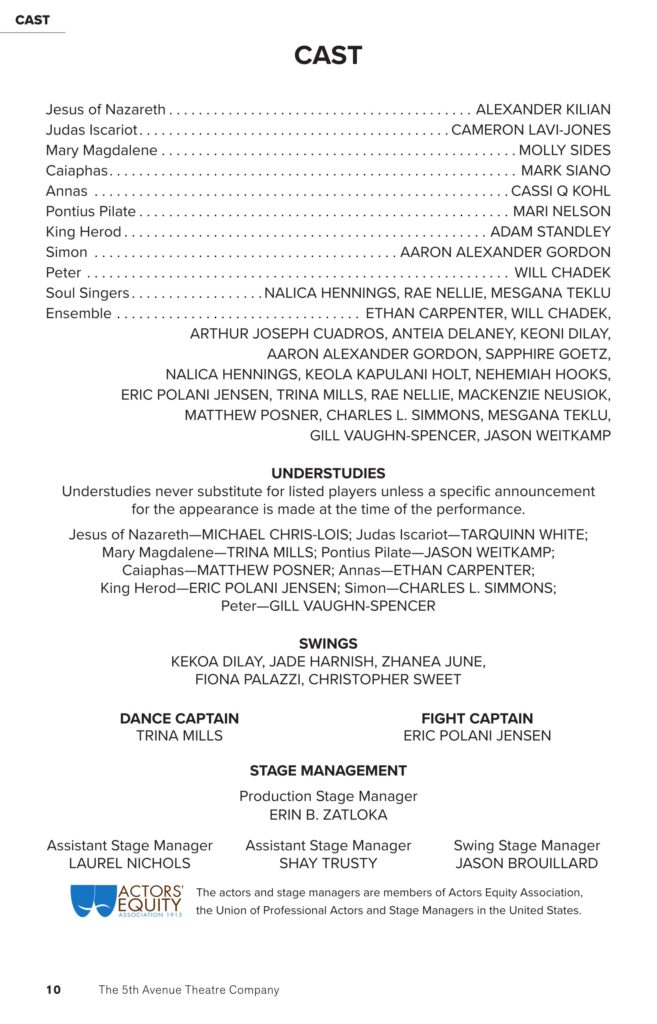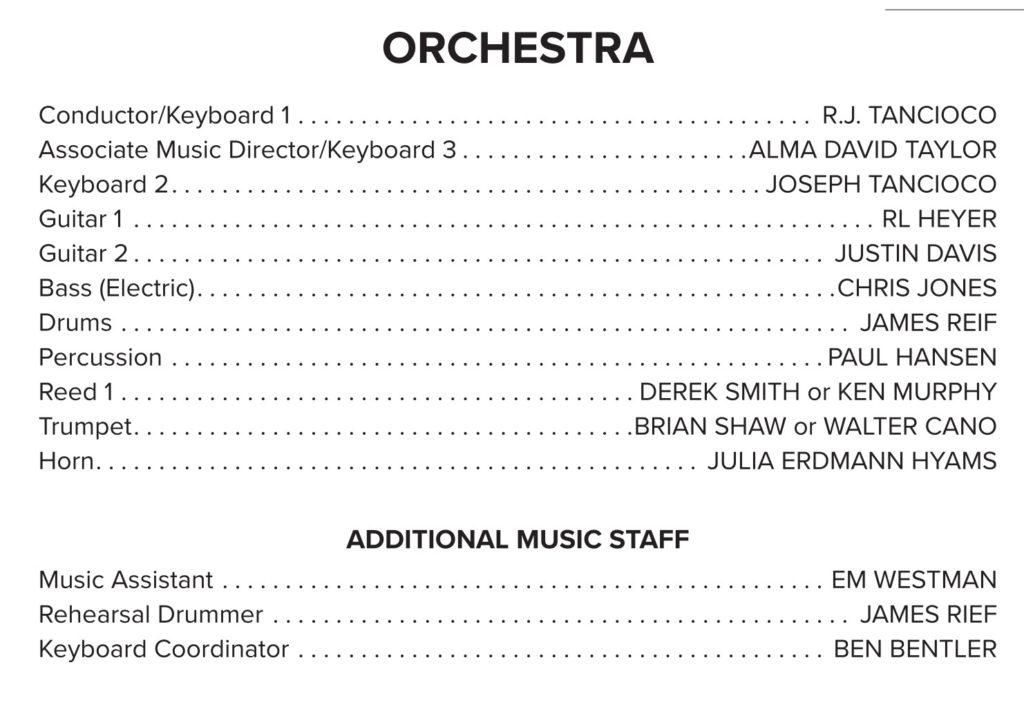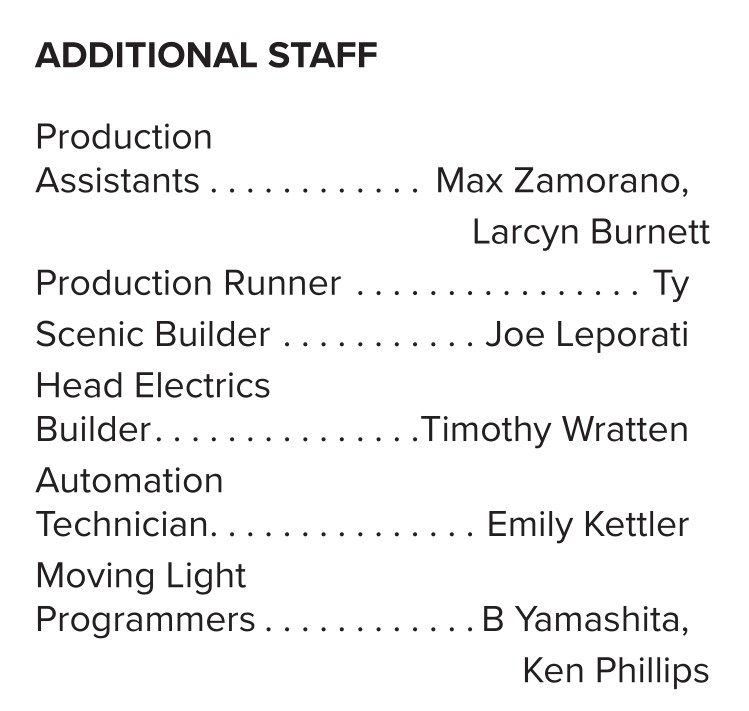
@showsiveseen Welcomed the Sabbath on the opening night of @Andrew Lloyd Webber Musicals and Tim Rice's "Jesus Christ Superstar" #rock opera #musical at @The 5th Avenue Theatre. This brutalist dystopian rebel-themed production outshined the national tour. Stunning lighting design from Robert Aguilar. A well-cast Alex Kilian (as #Jesus) carried the weight of the world on his chest. What exactly was written there? 👀 Closes 5/17. Review: showsiveseen.com/15328 Photos: Michael B Maine Director: Bill Berry Music Director: R.J. Tancioco Stage Mgr: Erin B. Zatloka Choreo: @Jimmy Shields #theatre #JesusChristSuperstar ♬ Jesus Christ Superstar (From "Jesus Christ Superstar") – Platinum Collection Band
Elevator Thoughts (aka Tweet): Welcomed the Sabbath on the opening night of Andrew Lloyd Webber and Tim Rice’s Jesus Christ Superstar rock opera musical at The 5th Avenue Theatre. This brutalist dystopian rebel-themed production outshined the national tour. Stunning lighting design from Robert Aguilar. A well-cast Alex Kilian (as Jesus) carried the weight of the world on his chest. What exactly was written there? 👀 Closes 5/17.
See it, especially if you grew up Christian.
Was This the First Time I Attended a Production of this Show? No, this was probably the 4th time I’ve seen this show.
Would I See It Again 3 Years from Now? Probably not, since it’s one of my least favorite Andrew Lloyd Webber musicals. But clearly, I can be convinced otherwise, since this was the 4th time I’ve seen the show!
Mainstream Appeal: Medium
If A Random Stranger Asked What Show They Should See This Weekend, Would I Mention This Production? Absolutely
My Synopsis (No Spoilers): Drawn from the biblical Gospel accounts, this musical traces Jesus’s journey from the peak of his fame to the cross.
Synopsis from the Licensor or Theatre Company: The rise and fall of a superstar. Passion. Betrayal. Redemption. And the ultimate rock opera. Jesus Christ Superstar is a global phenomenon that has wowed audiences for decades. A collaboration between theatrical powerhouses Andrew Lloyd Webber and Tim Rice, Jesus Christ Superstar is a high-energy rock musical that reimagines the last weeks of Jesus Christ’s life focusing on his relationships, struggles, and ultimate sacrifice. Told through the perspective of Judas Iscariot, this iconic show brings new life to the Biblical story. Don’t miss the musical phenomenon that changed the stage forever and set a whole new bar for musical theater!
Type: Rock Opera Musical
World Premiere: No
Several or Few Scenes: Several
Several or Few Settings/Locations: Several
Static (Stationary) or Dynamic Set: Mostly dynamic
Prior Exposure/Knowledge Required: You need to be familiar with the biblical accounts of Jesus.
Defined Plot/Storyline: Yes
Live Band/Orchestra: Yes
Union Actor(s): All
Total Actor(s): Too many to count
Perceived Pace of the Show: Medium speed
Was there an intermission? Yes
Length (Including Any Intermission): 2 hours
Other Rave(s)
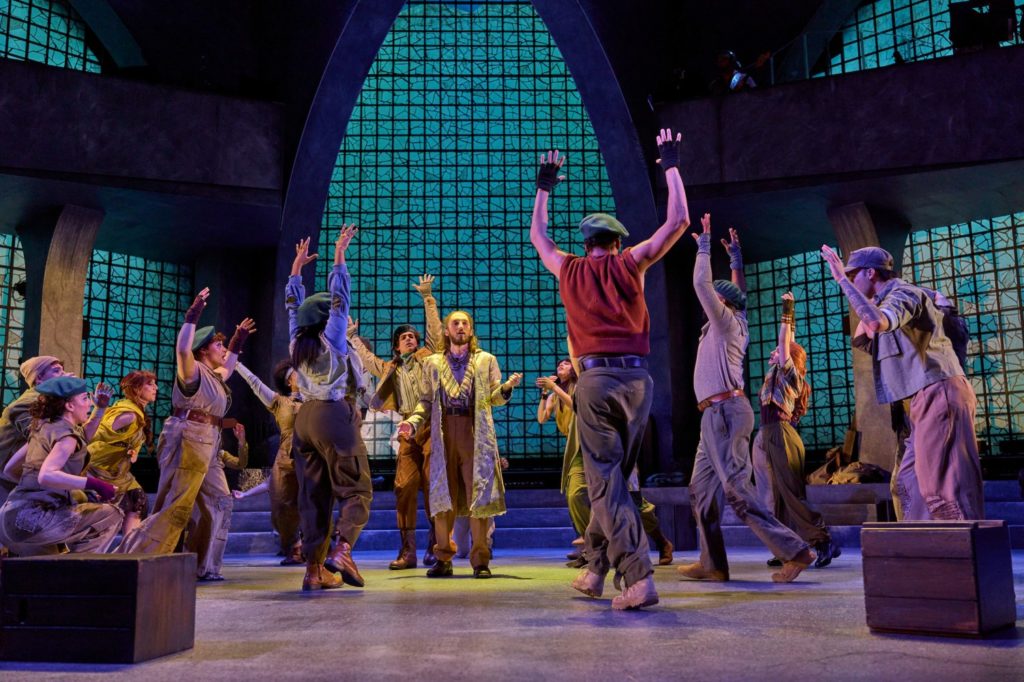
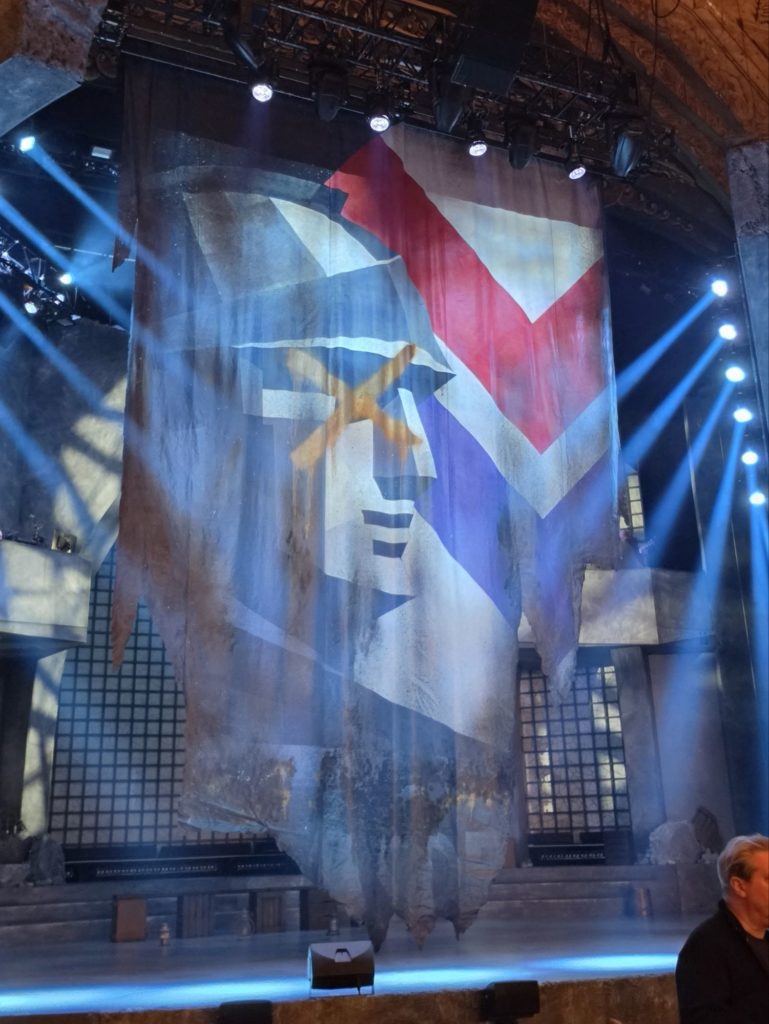
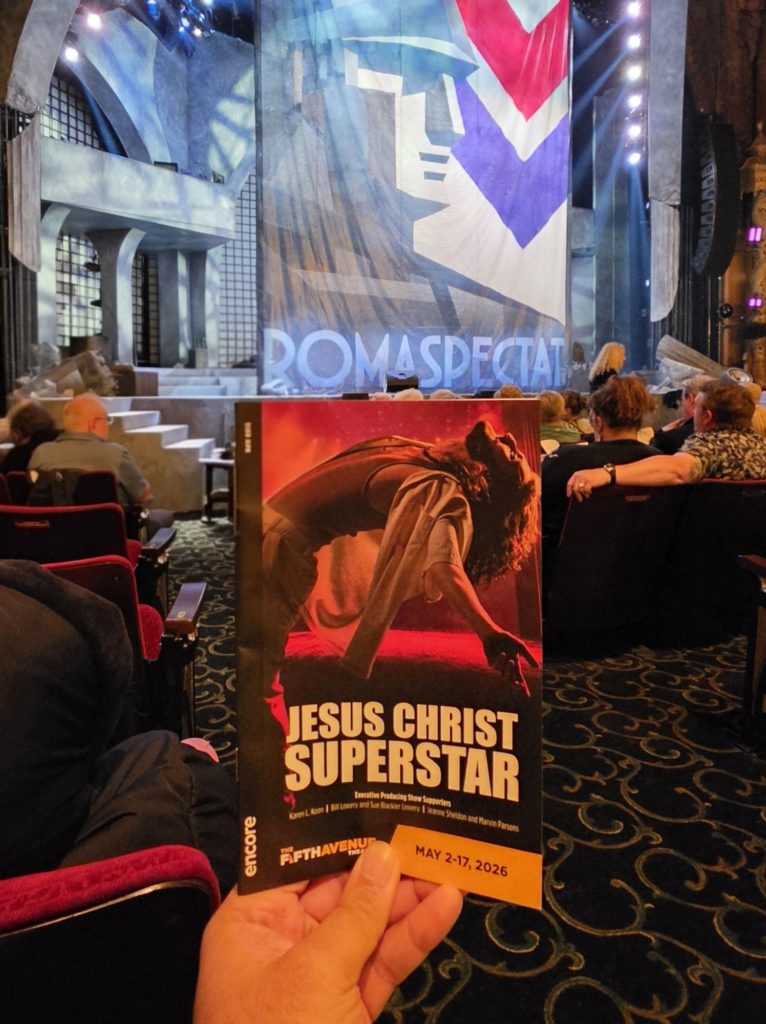
- Scenic Design: Scenic designer Parmida Ziaei envisioned a utilitarian brutalist architecture set in a post-apocalyptic dystopia. My first impression was a concrete Eastern European-style coliseum with the band positioned in the balcony and a banner of the establishment looming overhead. The banner was a bold declaration that greeted audiences the moment they entered the theatre. When that banner dramatically fell, it revealed grand lattice windows reminiscent of Soviet-era Chernobyl nuclear fuel assemblies. It wasn’t until the production’s final moments that the full picture clicked into place. This brutalist structure was a church temple all along!
- Rebel Theme: The production incorporated a rebel aesthetic that paired naturally with the scenic design. Insurgents in Communist-style green berets vandalized a banner of the establishment while stormtroopers pursued them. It evoked a spirit of defiance that sparked the story with urgency. I was reminded of The 5th Avenue Theatre’s Man of La Mancha production.
- Lighting Design: Lighting designer Robert Aguilar delivered one of the production’s most unexpected treats. His work with shadow was particularly striking beginning with the silhouette of Jesus cast against the establishment’s banner. It continued with the villains’ shadows thrown against the upstage wall. Not sure if that effect was intentional or a happy accident, but it worked. As a villain balcony descended from the stage rafters, foreboding cool light washed over the audience. Those same spotlights then tracked the fall of silver coins to the floor with expert timing, highlighting the gravity of the moment. Cool light also traced the edges of Ziaei’s scenic columns, while side-of-stage spotlights followed center-stage characters with stark precision.
The lighting design’s crowning achievement was when a suspended Jesus hung before a backdrop of an enormous illuminated cross. A small human figure dwarfed by a towering cross proved far more effective than the conventional staging with a physical cross. But it felt wholly consistent with the iconography we see in ostentatious historical churches. - Jesus: Alexander Kilian was a well-cast lookalike of the traditional Jesus archetype. However, his casting also represented a missed opportunity. Rather than defaulting to the typical inaccurate Caucasian representation of a Middle Eastern figure, it would have been a more powerful statement to cast an actor of native Arab heritage, which would be more in line with the character’s true origins. Given the ongoing genocide in Gaza, a Palestinian actor in the role would have been perfect! Nevertheless, Kilian performed with remarkable vocal assurance. I have seen him in Seattle productions before, but I didn’t realize how well he could sing until he effortlessly hit those upper tenor register notes from the opening of “What’s the Buzz / Strange Thing Mystifying.” He earned a well-deserved extended ovation for “Gethsemane (I Only Want to Say).”
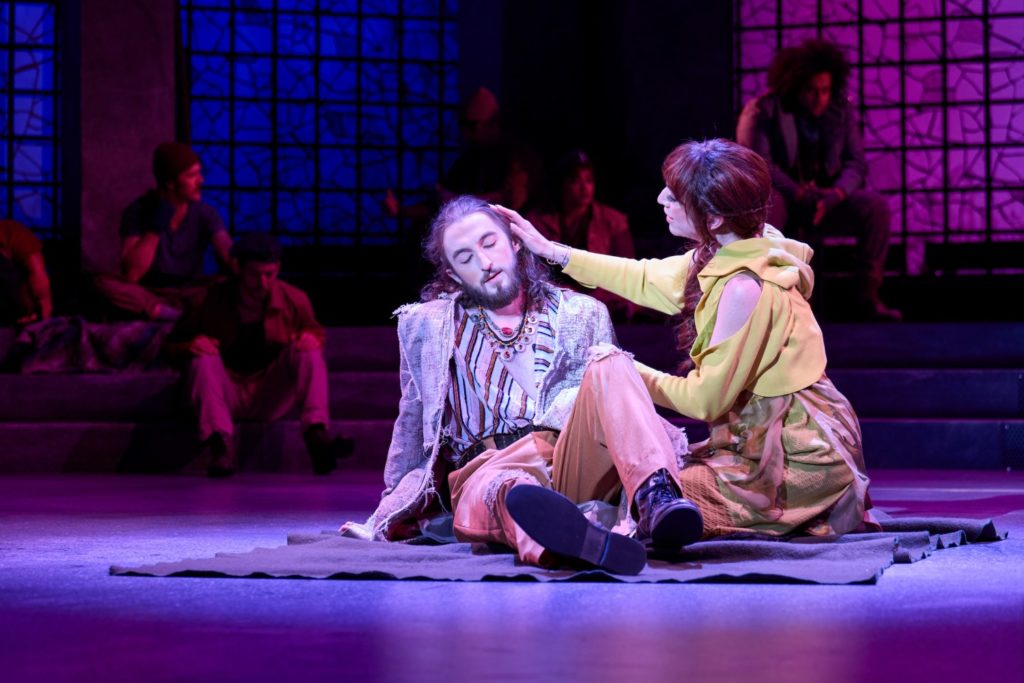
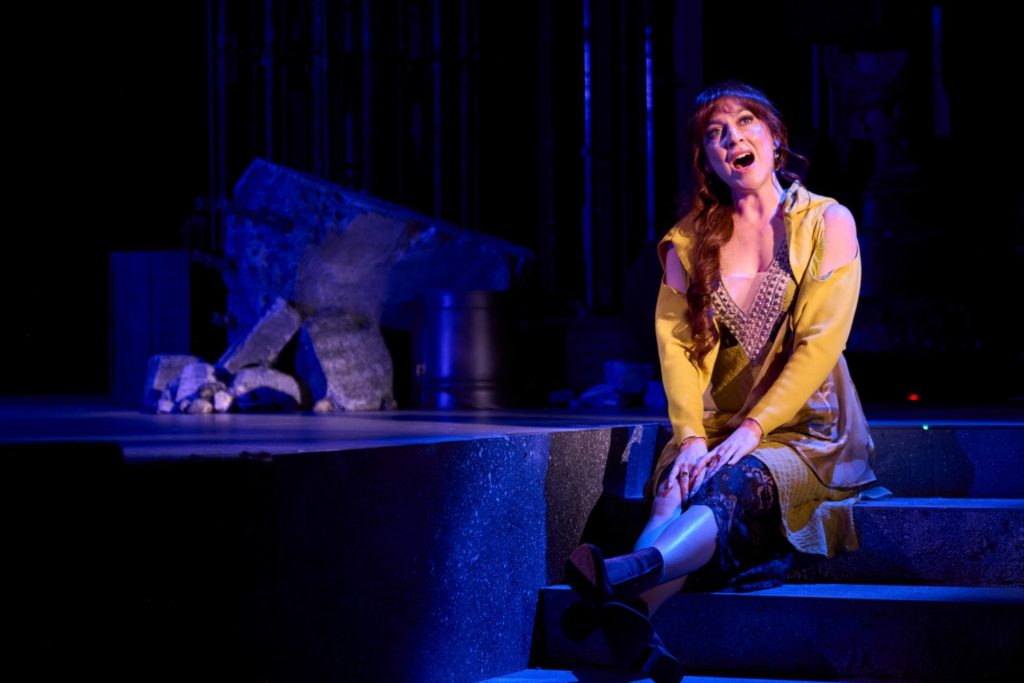
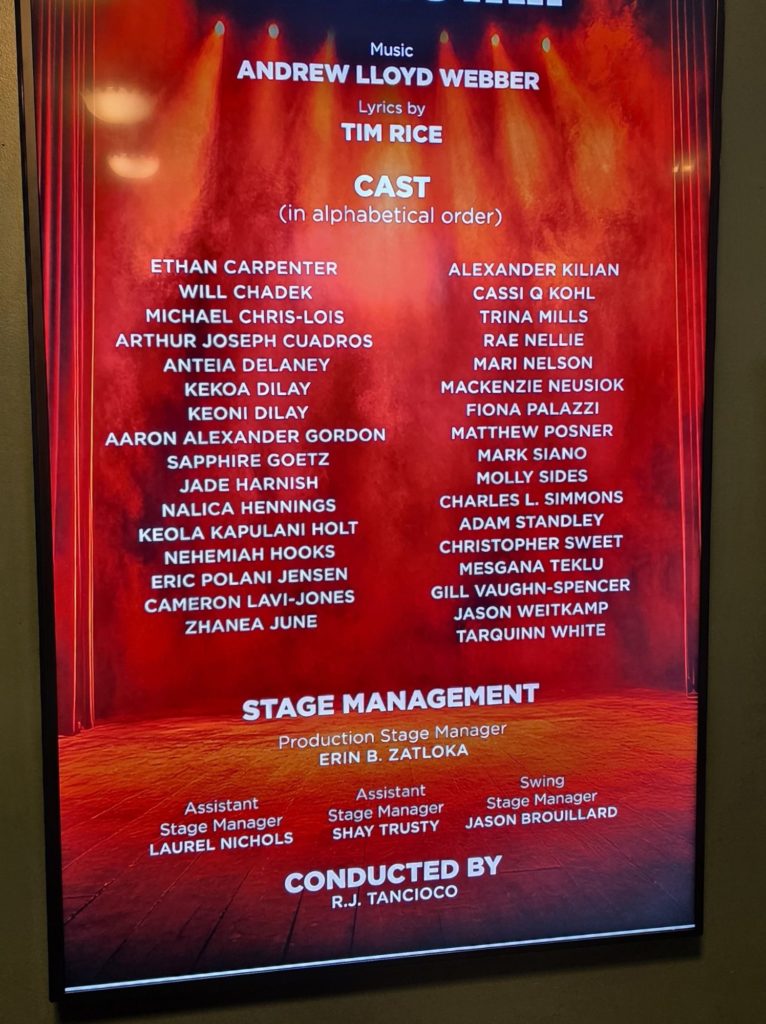
- Mary Magdalene: Molly Sides (as Mary Magdalene) delivered soaring ballads that provided a welcome contrasting relief to the surrounding rock numbers. Her rendition of “I Don’t Know How to Love Him” was her standout number.
- Temple Zombies: The production’s most memorable sequence was “The Temple” song when Jesus drove the profiteers from the temple. A unique driving, syncopated beat with riveting choreography (by Jimmy Shields) propelled the scene. The number segway-ed into mummified lepers clamoring at Jesus like zombies sucking away at his life force. Both ensemble numbers evoked a wonderfully visceral effect.
- Choreography : Shields’ choreography also shone in “Simon Zealotes / Poor Jerusalem,” where Simon (played by Aaron Alexander Gordon) opened with a brief dance solo before the ensemble erupted with the kinetic energy of a 1970s disco gospel television special.
- Superstar: That same funky choreography carried into the show’s iconic finale. It is always a shame that “Superstar” closes the show rather than occurring earlier like most musicals’ signature songs. It would have been perfect to end the first act with this song as the showstopper. Nevertheless, the rendition here was deeply satisfying, complete with sparklers and a powerhouse female soul trio comprised of Nalica Hennings, Rae Nellie, and Mesgana Teklu.
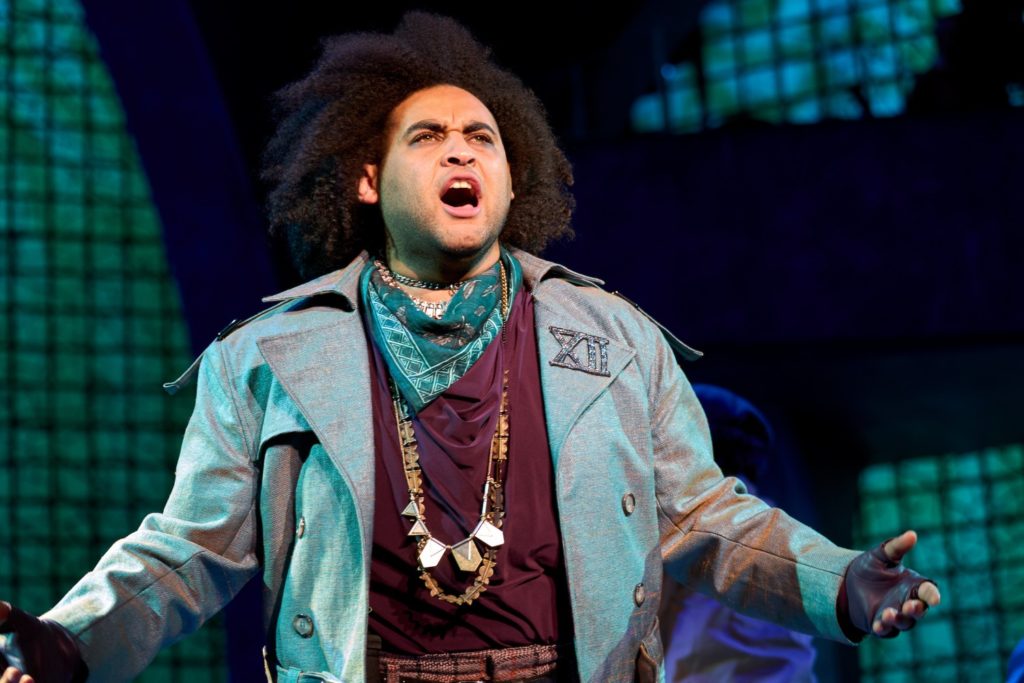
- Costume Design: Much of “Superstar’s” visual impact owed itself to costume designer Danielle Nieves. The finale costumes radiated a disco goddess energy (think Rachel Chu from Crazy Rich Asians), but with more glitter and gospel. Pontius Pilate’s villain costume on Mari Nelson was equally memorable. Its duality was reminiscent of Two-Face from Batman. It was a fitting visual metaphor for a figure of ambiguous authority.
- The Last Supper: The recreation of Leonardo da Vinci’s The Last Supper poses was a nice touch. A scenic piece overhead adorned with several melted candles served as an improvised chandelier.
Rant(s)
- Understandability : Lyric clarity was a persistent challenge throughout the show. But in fairness, this production faced a stacked deck from the start. I feel like lyrics in musicals are already usually hard to understand. This is precisely why I cherish captioned performances. Sung-through musicals without spoken dialogue (think Les Misérables) are inherently even more difficult to follow. And the dense, layered rock music of the 1970s score only compounds the difficulty. Even on the cast recording, the lyrics are hard to parse. The muddled lyrics also made character identification a struggle. This show assumes a baseline familiarity with the biblical narrative. Those coming in without it may find themselves adrift.
- Shouting: The shouted vocal passages were not pleasant to hear. And I suspect they aren’t entirely healthy for the performers either. But there will naturally be a lot of this in a rock musical. It’s an occupational hazard baked into the genre.
Other Musing(s) and Observation(s)
- “King Herod’s Song”: Adam Standley’s King Herod had the makings of a showstopper, but the number missed an opportunity to add a tap sequence that could have pushed it into more memorable territory. For comparison, Natalie Moe’s rendition in Reboot Theatre’s local production set a high bar for me that this one didn’t quite clear.
- Cast Size: Surprisingly, the cast at times felt too large for certain numbers (Queue the “oh no, my steak is too juicy and my lobster too buttery” meme). Usually, that’s never the case for full Equity productions like this. There were moments when the stage felt overstuffed in a way more characteristic of school theatre, where maximizing stage time for every student takes precedence over casting efficiency.
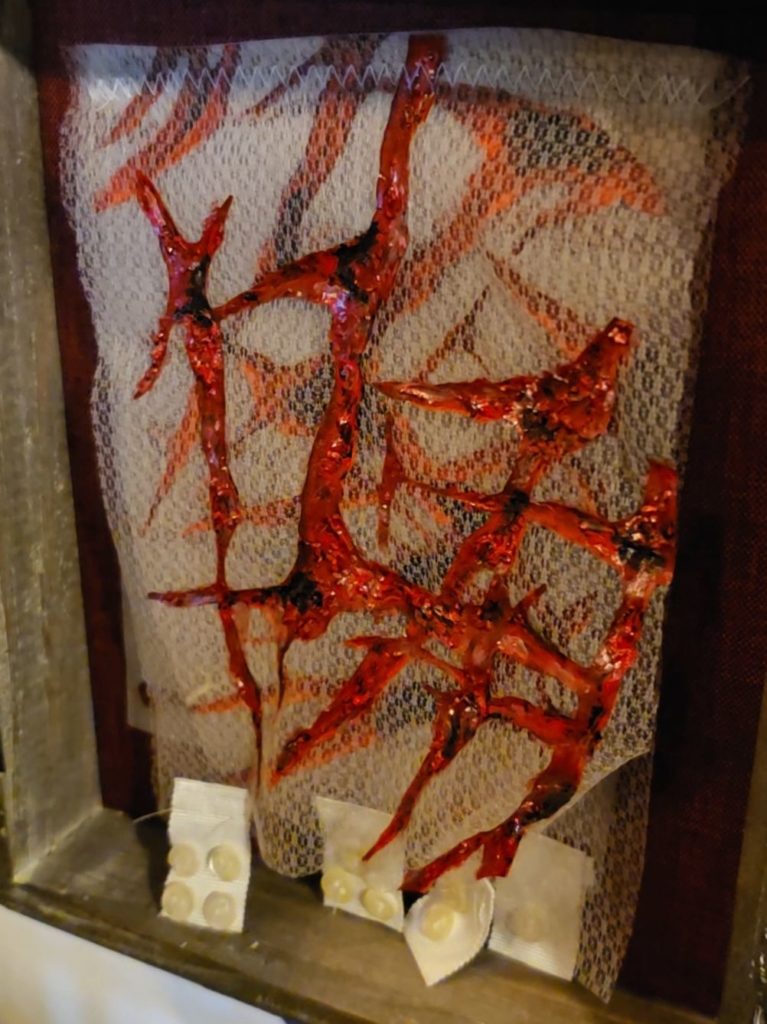
- Skin Art: The painted wounds on Jesus’s back were well designed. But they were only visible when Jesus writhed on the floor, which meant much of the orchestra-level audience likely never saw them. And what exactly was written on Jesus’s chest during the crucifixion? My money is on “King of the Jews,” but I’d love to know for certain. Drop your theories in the comments of my social media posts.
Theatre Company: The 5th Avenue Theatre
Venue: The 5th Avenue Theatre
Venue Physical Address: 1308 5th Ave, Seattle, WA 98101
Price Range: 50-175 USD
Ticket Affordability Options: The 5th Avenue Theatre often partners with organizations you’re affiliated with for discount tickets. For example, they sometimes offer a discount for my employer affiliation and my apartment complex. Rush tickets are typically also available the day of the performance at the box office.
Seating: Assigned Seats
Parking: When I don’t walk to the theatre or park on the street, I park in the paid garage at the Motif Hotel northwest of the theatre. The entrance is on 5th Ave. DO NOT park in the APA Coast Seattle Downtown Hotel garage (entrance on 6th Ave). That’s where most of the audience (and I think the subscribers) parks, so it’s a nightmare to leave. However, the APA Coast Seattle Downtown Hotel garage is the closest garage to the theatre and you can access the theatre through a tunnel if you want to avoid the elements. But, in my opinion, this benefit is not worth the time wasted leaving the garage.
Like/Comment/Share my Social Media Posts About this Performance:
Buy a Ticket or Learn More:
Photos: See production photos below by Michael B Maine.
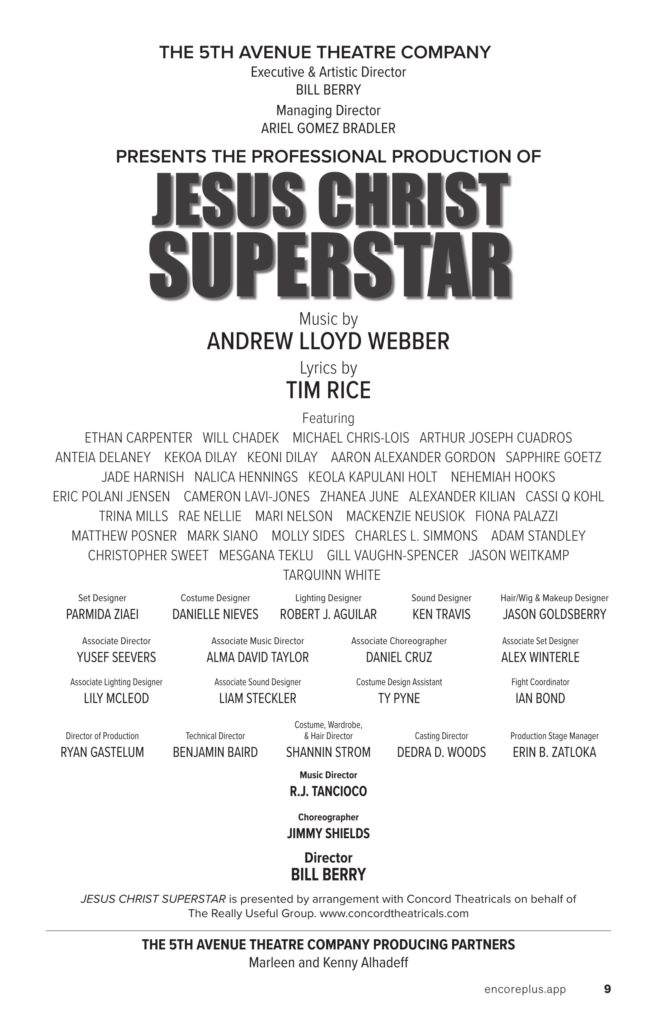
Cast and Production Team: See after photos below.